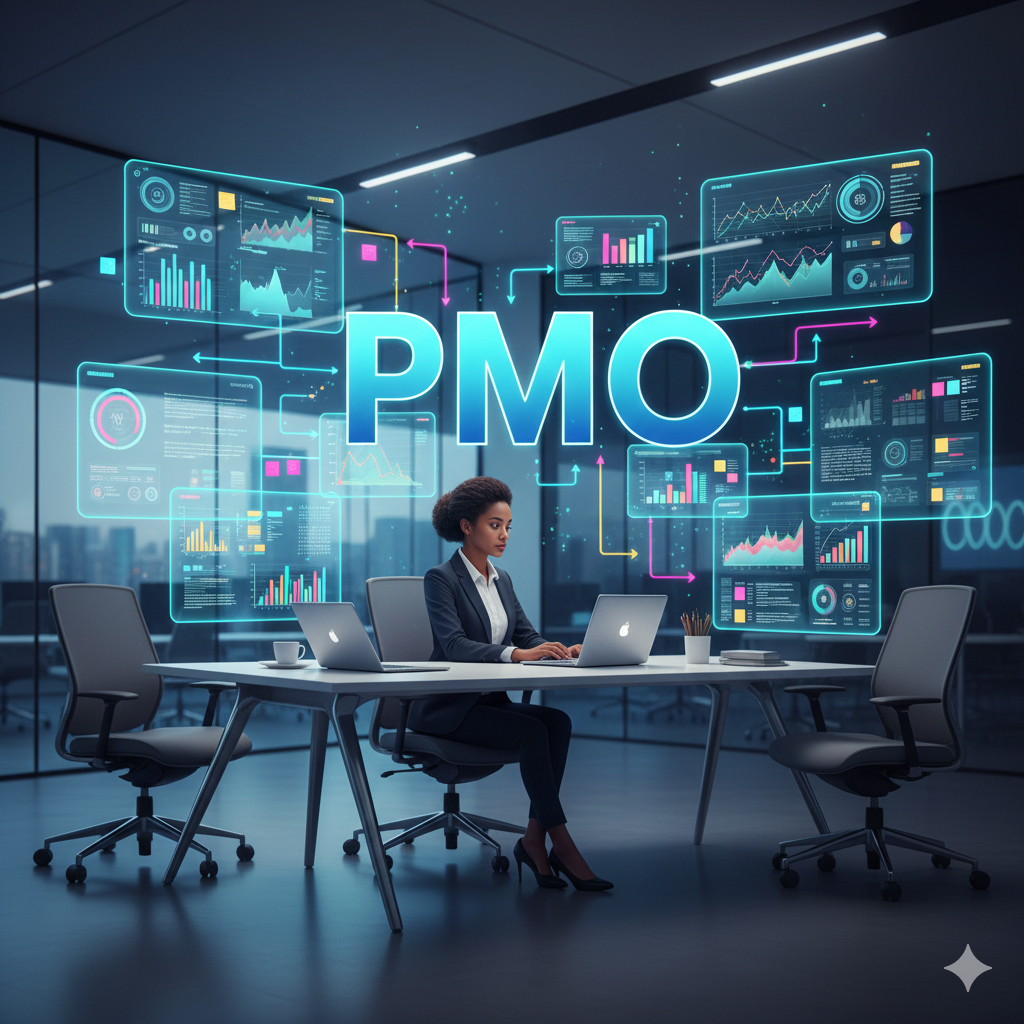
PMO stands for “Project Management Office” in business and organizational contexts.
It can also refer to other meanings depending on the context, including slang and online communities, but the most recognized usage is in project management, corporate planning, and business strategy.
PMO is an essential concept in modern organizations, helping businesses streamline projects, improve efficiency, and maintain consistent results across departments. This article explores the full meaning of PMO, its types, roles, benefits, implementation, misconceptions, and even alternative or slang interpretations.
What Is PMO?
A Project Management Office (PMO) is a centralized department within an organization that standardizes project management processes, policies, and procedures. It acts as a hub for project governance, best practices, and reporting.
Core Functions of a PMO:
Defining project standards
Tracking project performance
Allocating resources efficiently
Offering tools and methodologies
Monitoring risks and deliverables
Aligning projects with organizational goals
In essence, a PMO ensures projects are completed on time, within budget, and according to quality standards.

PMO in Business: Full Explanation
PMO plays a critical role in organizations by:
Standardizing project methodology (Agile, Waterfall, Hybrid)
Providing training and mentoring for project managers
Improving decision-making based on data
Enhancing cross-departmental collaboration
Reducing redundancies and errors
Table: PMO vs Project Manager
| Role | PMO | Project Manager |
|---|---|---|
| Focus | Organization-wide governance | Single project execution |
| Responsibility | Policies, tools, resources | Task completion, deadlines |
| Scope | Strategic | Operational |
| Decision-making | Approves, tracks | Executes |
Types of PMO
Not all PMOs function the same way. There are generally three main types:
1. Supportive PMO
Provides templates, best practices, and training
Low control over projects
Acts as guidance center
2. Controlling PMO
- Requires compliance with standards and procedures
- Moderate control over projects
- Ensures project audits and reporting
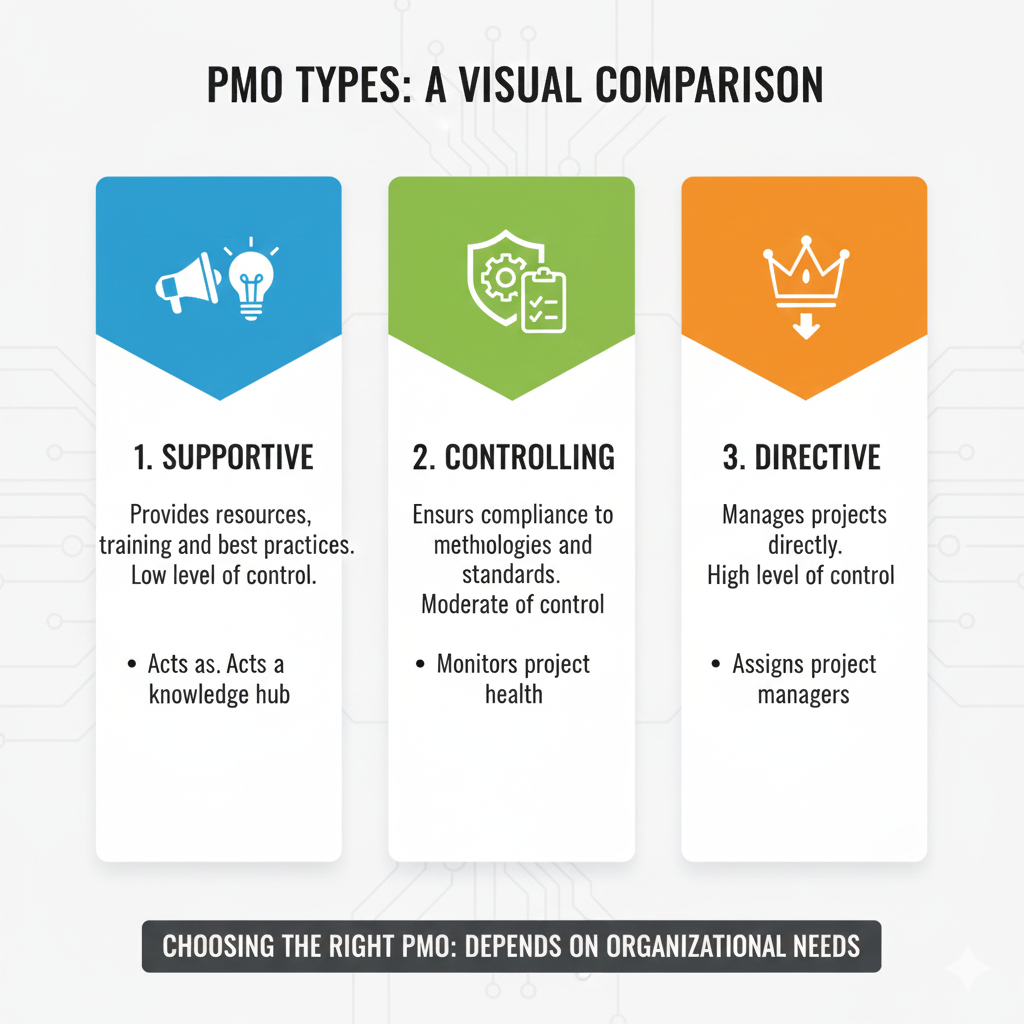
3. Directive PMO
- Directly manages projects
- High authority over project teams
- Responsible for outcomes and resource allocation
Table: PMO Types Summary
| PMO Type | Control Level | Key Role |
|---|---|---|
| Supportive | Low | Advisory and templates |
| Controlling | Medium | Compliance and monitoring |
| Directive | High | Project execution and delivery |
Benefits of Having a PMO
Organizations with an effective PMO can experience:
Better project alignment with business strategy
Reduced project failure rates
Clear resource management
Improved communication across teams
Consistent reporting and analytics
Employee skill development
PMO is particularly valuable for large organizations handling multiple projects simultaneously.
How PMO Improves Project Success
Standardization – Everyone follows the same processes.
Risk Management – Anticipates issues before they escalate.
Performance Metrics – Tracks KPIs to evaluate success.
Resource Optimization – Allocates staff and budget efficiently.
Strategic Alignment – Ensures all projects support business goals.
Example:
A tech company introducing 10 new software products annually can benefit from PMO oversight to ensure consistent timelines, quality, and budget adherence.

Common Misconceptions About PMO
PMO is only for big companies → False. Small businesses benefit too.
PMO replaces project managers → False. PMO supports them.
PMO slows down projects → False. Proper PMOs streamline processes.
PMO is just documentation → False. It actively manages and monitors.
PMO in the Digital Age
Modern PMOs have evolved with digital tools and technology:
Project management software (Asana, Jira, MS Project)
Cloud collaboration tools
AI-based predictive analytics
Dashboard reporting
Table: Traditional PMO vs Digital PMO
| Feature | Traditional PMO | Digital PMO |
|---|---|---|
| Tools | Manual reports | Automated dashboards |
| Communication | Meetings & emails | Collaboration platforms |
| Monitoring | Periodic review | Real-time tracking |
| Decision-making | Delayed | Immediate & data-driven |
Digital PMOs enhance efficiency and project visibility.
Alternative Meanings of PMO
While PMO is mostly Project Management Office, in slang or informal online contexts it can mean:
“Porn, Masturbation, Orgasm” in online communities discussing habits or health.
“Performance Management Officer” in some HR contexts.
Other niche industry abbreviations, depending on context.
It’s important to understand the context before interpreting PMO.
PMO Roles and Responsibilities
A PMO can have multiple roles:
Project Governance – Ensuring alignment with organizational standards
Resource Management – Allocating staff, tools, and budget
Training & Mentoring – Supporting project managers
Project Portfolio Management – Balancing multiple projects
Performance Tracking – Using KPIs and metrics
Risk Assessment – Identifying and mitigating potential issues
Example Responsibilities Table
| Role | Responsibility |
|---|---|
| Governance | Monitor project compliance |
| Resource | Allocate budget & staff |
| Training | Provide templates & best practices |
| Tracking | Report progress & KPIs |
| Risk | Predict delays & issues |
How to Implement a PMO
Define purpose and objectives
Select PMO type (Supportive, Controlling, Directive)
Identify processes and tools
Train team members
Launch pilot projects
Measure performance and adjust
Successful PMOs start small and scale as organizational needs grow.
PMO Best Practices
Regular reporting – Weekly or monthly dashboards
Clear communication – Between stakeholders and project teams
Standardized documentation – Templates, forms, guidelines
Performance measurement – KPIs, metrics, audits
Continuous improvement – Lessons learned incorporated
PMO in Real-Life Companies
Microsoft – Uses PMO for software development projects
Apple – PMO ensures product launch consistency
Amazon – Manages cross-functional projects using PMO oversight
Healthcare – Hospitals use PMOs to track operations and IT projects
These examples show PMO’s versatility in different industries.
FAQs
What does PMO stand for?
Mostly Project Management Office, but can have alternative meanings depending on context.
Is PMO only for large companies?
No. Even small and medium businesses can benefit from a PMO.
What are the types of PMO?
Supportive, Controlling, and Directive.
Can PMO replace project managers?
No. PMO supports project managers with governance, tools, and oversight.
What is the slang meaning of PMO?
In online health forums, PMO can mean Porn, Masturbation, Orgasm.
Conclusion
PMO is a versatile and critical concept in project management, providing structure, guidance, and oversight to organizations. Its primary function, as a Project Management Office, ensures that projects are aligned with business goals, delivered on time, and managed efficiently. While it also has slang or alternative interpretations, the corporate and professional meaning remains the most recognized and widely used.
Understanding PMO, its types, benefits, roles, and implementation strategies can dramatically improve project outcomes and overall organizational success.

David is the creative mind behind jokes Crafter, a hub for clever jokes, witty wordplay, and laugh-out-loud content. With a passion for humor and a knack for crafting the perfect punchline, David brings smiles to readers across the globe. When he's not writing, he's probably thinking up his next viral joke or enjoying a good comedy show.
- David

- David
- David
- David
- David
- David
- David
- David
- David
- David