🧠 Why Korean Slang Rules the Internet
Korean slang—known as 신조어 (shin-jo-eo) or “new words”—has become a global language trend, thanks to K-pop, K-dramas, and social media platforms like TikTok and Instagram. Every year, new expressions appear that reflect Korean youth culture, humor, and digital creativity.
Using Korean slang is more than just a fun way to talk—it’s a way to connect with modern Korean culture, express emotions vividly, and sound “in the know.”
Whether you’re a BTS ARMY, a K-drama addict, or just someone who loves modern lingo, this guide breaks down the most iconic, trending, and relatable slang phrases Koreans actually use.
🪩 H2-1: Top Trending Korean Slang Words in 2025
Korean slang constantly evolves—here are the hottest phrases you’ll hear from Seoul’s youth and all over social media.
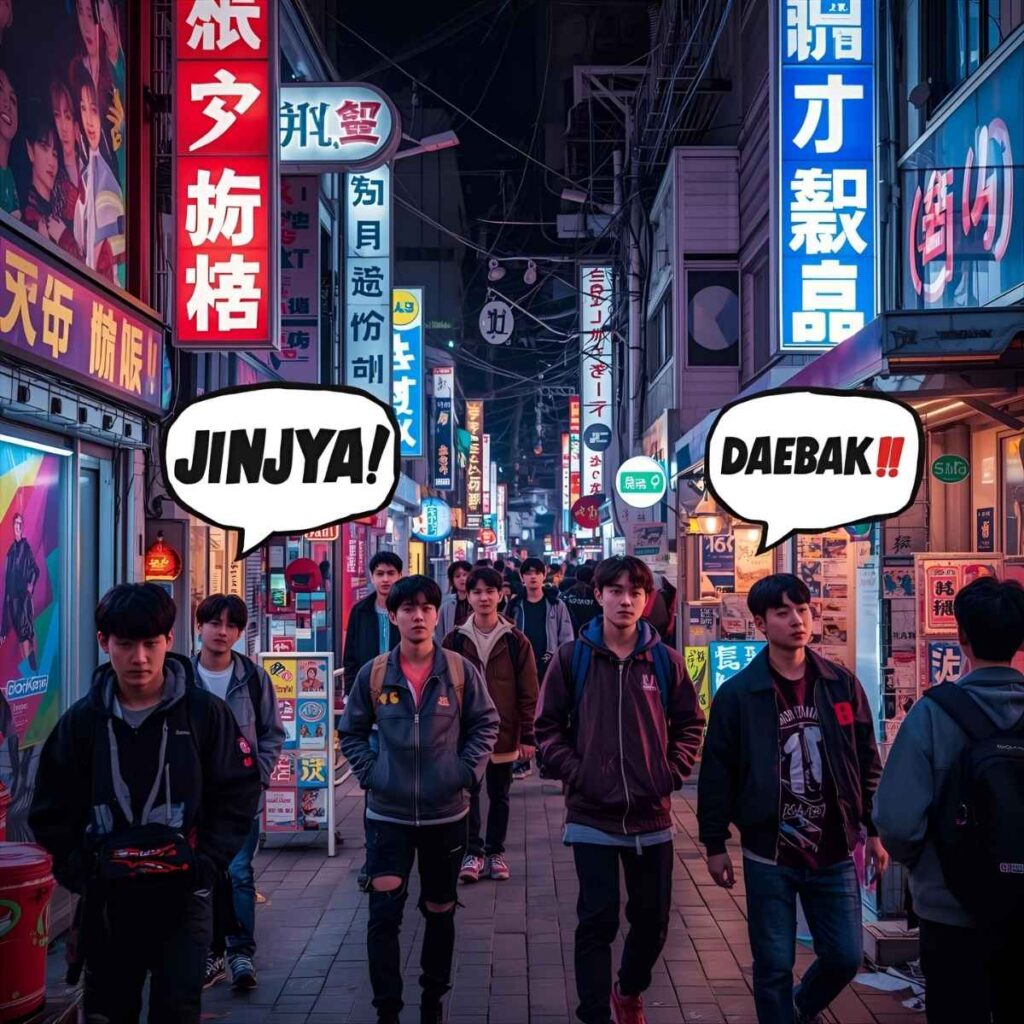
1. Jinjja (진짜) — “Really / Seriously”
Meaning: Used to emphasize surprise or disbelief.
Example: “진짜?” (Jinjja?) → “Really?” or “Are you serious?”
2. Daebak (대박) — “Awesome / Jackpot!”
A timeless Korean slang word meaning something incredible or mind-blowing.
Example: “That concert was daebak!”
3. Aegyo (애교) — “Cuteness overload”
Describes a cute, playful style of behavior—often used in K-pop or romantic contexts.
Example: “Her aegyo makes everyone smile.”
4. No-jam (노잼) — “Not fun / Boring”
A mix of English “no” + Korean “jam” (fun).
Example: “That movie was no-jam.”
5. Jam-kkang (잠깐) — “Wait a sec!”
Quick way to tell someone to hold on for a moment.
6. Ting (팅) — “Ghosting someone”
New slang for when someone suddenly stops texting or disappears online
💬 H2-2: Korean Internet and Text Slang You’ll See Online
Social media and texting have created a new wave of internet slang in Korea. Here’s what you’ll see on chats, TikTok captions, and fan comments.
1. ㅋㅋㅋ (kkk) — Laughter
Equivalent of “LOL.” The more k’s, the harder you’re laughing.
2. ㅠㅠ / ㅜㅜ — Crying emojis in text form
Used to express sadness or sympathy.
3. ㅇㅋ (ok) — Just “OK.”
Shortened for texting convenience.
4. ㅊㅋ (chukha) — Congrats!
Short for “축하해 (chukha-hae).”
5. ㄱㄱ (gogo) — Let’s go!
Slang shorthand used for plans or motivation.
6. ㅎㅇ (hi) — Hi!
Korean short text form for “안녕 (annyeong).”
Pro Tip:
Combining English and Hangul slang is trendy. For example, someone might text,
“ㅋㅋㅋ u so no-jam today 😂”
This fusion of cultures is what makes Korean digital slang so globally loved.
🧋 H2-3: Korean Slang in K-Pop and K-Drama Culture
Much of the world learns Korean slang through entertainment. From BTS lyrics to Netflix dramas, slang makes dialogue feel authentic and emotional.

1. Oppa (오빠) — Older brother / boyfriend term
Used by women to refer to older males. In K-pop, it’s often used flirtatiously.
2. Unnie (언니) & Hyung (형) — Older sister / brother terms
Show respect, warmth, and social closeness.
3. Sasaeng (사생) — Obsessive fan
Used to describe fans who invade idols’ privacy.
4. Bap (밥) — Meal / rice
Used casually to mean “let’s eat.” Example: “Bap meokja!” → “Let’s grab food!”
5. Fighting! (화이팅!) — “You can do it!” / Cheer up!
Koreans use it to motivate themselves or friends.
6. Hwaiting! (화이팅!) — Alternate romanization of Fighting
Often shouted at concerts or exams.
🌈 H2-4: Slang with Cultural Meanings You Should Know
1. Han (한) — Deep emotional sorrow or resentment
A word unique to Korean emotion and identity.
2. Chincha-bae (진짜배기) — The real deal
Used to compliment authenticity.
3. Nunchi (눈치) — Social awareness / reading the room
A core Korean concept about sensitivity to others’ feelings.
4. Namchin / Yeochin (남친 / 여친) — Boyfriend / Girlfriend
Shortened from “namja chingu” and “yeoja chingu.”
5. Heol (헐) — OMG / Wow / No way!
A reaction word used in shock or disbelief.
These expressions capture the soul of Korean culture—respect, emotional nuance, and quick wit.
🌍 H2-5: Why Learning Korean Slang Matters
Learning slang helps you:
Understand K-drama humor and references
Sound natural and confident in online chats
Build cultural empathy
Stay up-to-date with pop culture trends
Slang reflects not just language—but identity, creativity, and connection. When you use words like daebak or jinjja, you’re part of a global fan language that unites millions.
💡 Pro Tips for Using Korean Slang Correctly
Mind your setting: Don’t use slang in formal situations or with elders.
Practice pronunciation: Watch K-dramas and mimic tone.
Use sparingly: Too much slang can sound unnatural.
Stay updated: Words trend fast—2023 slang might be “no-jam” in 2025!
❓ FAQs About Korean Slang
Q1. What’s the most common Korean slang?
A: “Jinjja” and “Daebak” are the most used slang words across generations.
Q2. Is it okay for foreigners to use Korean slang?
A: Yes! Koreans usually find it endearing if you use slang correctly and respectfully.
Q3. How can I learn slang naturally?
A: Follow Korean TikTokers, watch variety shows, and chat in language exchange apps.
Q4. Is K-pop slang different from regular slang?
A: Slightly—K-pop slang includes fan community words like “bias,” “comeback,” and “fanchant.”
Q5. Do slang words change every year?
A: Absolutely. Each generation creates new ones—reflecting memes, trends, and tech culture
🏁 Conclusion: Speak Korean Like a Local, Feel the Vibe
Korean slang isn’t just about trendy words—it’s about feeling the heartbeat of modern Korea. Each slang term carries the humor, attitude, and creativity of its people. From “jinjja” to “heol,” these expressions reveal how deeply language connects generations and cultures.
Learning them helps you do more than just understand a conversation—it lets you participate in it. You’ll laugh at the right jokes, catch hidden meanings in K-dramas, and vibe naturally with Korean speakers online.
So next time you watch a K-pop live or scroll Korean TikTok, listen closely—you’ll recognize these slang gems everywhere. Use them wisely, stay curious, and remember: language is living, and Korean slang is where it dances.

David is the creative mind behind jokes Crafter, a hub for clever jokes, witty wordplay, and laugh-out-loud content. With a passion for humor and a knack for crafting the perfect punchline, David brings smiles to readers across the globe. When he's not writing, he's probably thinking up his next viral joke or enjoying a good comedy show.
- David

- David
- David
- David
- David
- David
- David
- David
- David
- David