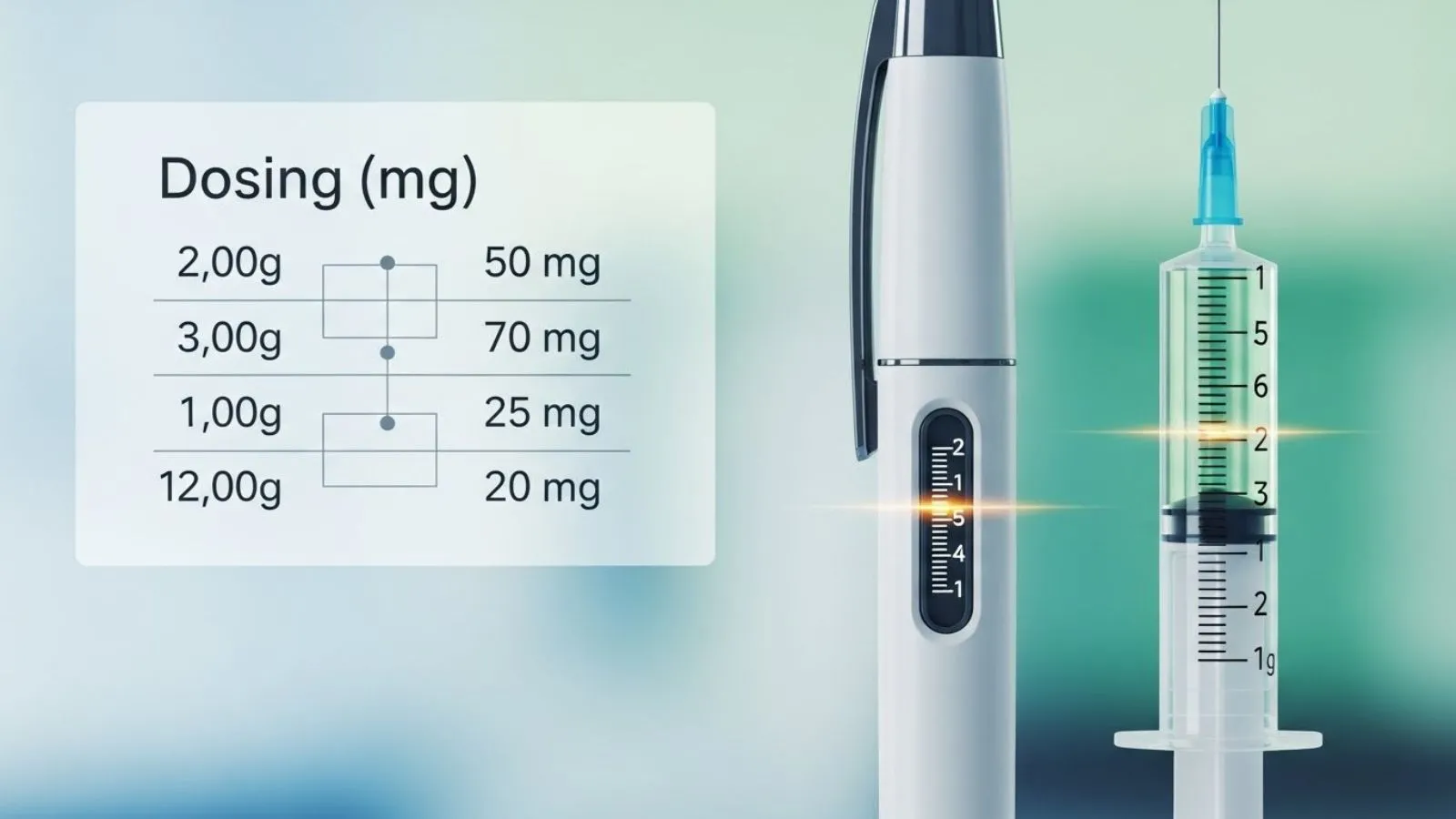
Tirzepatide has quickly become one of the most talked-about medications for weight loss, but one area that confuses many people is dosing in units. Prescriptions are usually written in milligrams (mg), while injections are measured in units, especially when using syringes or compounded vials. This mismatch often leaves users unsure about how much medication they are actually injecting—and concerned about safety and effectiveness.
Understanding tirzepatide dosing for weight loss in units is essential for achieving consistent results while avoiding common dosing mistakes. Taking too little may slow progress, while taking too much can increase side effects like nausea, vomiting, and fatigue. That’s why a clear explanation of how units relate to milligrams is so important.
In this guide, we’ll break down tirzepatide dosing in simple, beginner-friendly terms. You’ll learn how tirzepatide doses are structured for weight loss, how to convert mg into units, and how to follow a safe weekly dosing schedule. Whether you’re just starting or adjusting your dose, this article will help you use tirzepatide with confidence and clarity.
What Is Tirzepatide?
Tirzepatide is a prescription medication designed to help regulate blood sugar and support significant weight loss. It belongs to a newer class of drugs known as dual GIP and GLP-1 receptor agonists, which means it targets two key hormones involved in appetite control and metabolism. Unlike older weight-loss injections that focus on a single hormone pathway, tirzepatide works on both, making it especially effective for many people.
Tirzepatide is sold under the brand names Mounjaro® and Zepbound®. Mounjaro was initially approved for type 2 diabetes, while Zepbound is specifically approved for chronic weight management. Even though the brand names differ, the active ingredient—tirzepatide—is the same, and the dosing principles for weight loss are very similar.
For weight loss, tirzepatide helps reduce hunger, increase feelings of fullness, and slow down how quickly food leaves the stomach. These effects naturally lead to lower calorie intake without the constant struggle of feeling deprived. Many users also experience improved insulin sensitivity, which can help reduce fat storage over time.
One important thing to understand is that tirzepatide is not a quick-fix solution. Weight loss typically occurs gradually over weeks and months as the dose is slowly increased. This gradual approach helps the body adjust to the medication and minimizes side effects. Understanding how tirzepatide works sets the foundation for learning why proper dosing—especially when measured in units—is critical for safe and sustainable weight loss results.
How Tirzepatide Works for Weight Loss
Tirzepatide supports weight loss by acting on two important hormone receptors in the body: GLP-1 (glucagon-like peptide-1) and GIP (glucose-dependent insulinotropic polypeptide). These hormones play a major role in regulating appetite, digestion, and blood sugar levels. By activating both pathways at the same time, tirzepatide creates a stronger and more balanced effect than medications that target only one hormone.
One of the main ways tirzepatide promotes weight loss is by reducing appetite. It sends signals to the brain that increase feelings of fullness, helping people feel satisfied with smaller portions. At the same time, tirzepatide slows gastric emptying, meaning food stays in the stomach longer. This delay helps prevent sudden hunger spikes and reduces cravings between meals.
Tirzepatide also improves insulin sensitivity, which helps the body use glucose more efficiently. When insulin works properly, the body is less likely to store excess calories as fat. This metabolic support is especially helpful for individuals who struggle with insulin resistance or weight gain related to blood sugar fluctuations.
Because of these combined effects, tirzepatide is taken as a once-weekly injection. The medication builds up gradually in the body, which is why weight loss does not happen overnight. Most people begin noticing appetite changes within the first few weeks, while visible weight loss typically becomes more noticeable after dose increases.
This gradual action explains why dosing must be increased slowly and carefully. Understanding how tirzepatide works makes it easier to see why following the correct dosing schedule—and measuring doses accurately in units—is essential for maximizing weight loss while minimizing side effects.
Understanding Tirzepatide Dosing: mg vs Units
One of the most confusing aspects of using tirzepatide for weight loss is the difference between milligrams (mg) and units. Doctors prescribe tirzepatide in milligrams because mg represents the actual amount of medication your body needs. However, when it comes time to inject the medication—especially from a vial or compounded version—you often measure the dose in units using an insulin syringe. This disconnect is where many dosing errors happen.
Milligrams refer to the strength of the drug, while units refer to the volume of liquid you inject. The number of units needed to deliver a specific mg dose depends entirely on the concentration of the medication, such as how many milligrams are in one milliliter (mL) of liquid. For example, if your tirzepatide concentration is 5 mg per mL, injecting 0.5 mL delivers 2.5 mg—but that same 0.5 mL may equal 50 units on an insulin syringe. This is why blindly copying someone else’s “unit dose” can be dangerous.
Understanding this distinction is critical for both safety and effectiveness. Injecting too many units could mean taking a higher dose than intended, increasing the risk of nausea, vomiting, and other side effects. Injecting too few units may result in a dose that’s too low to suppress appetite or support weight loss.
This confusion is less common with prefilled pens because the dose is preset. However, with vials and syringes, you are responsible for measuring the correct volume. Before injecting, you must always confirm your tirzepatide concentration and calculate how many units correspond to your prescribed mg dose. Mastering this concept sets the stage for safely converting tirzepatide dosing for weight loss into accurate units.
Tirzepatide Concentrations Explained
To correctly measure tirzepatide dosing for weight loss in units, you must first understand the concentration of your medication. Concentration tells you how much tirzepatide (in milligrams) is contained in each milliliter (mL) of liquid. Without this information, it’s impossible to safely convert a prescribed mg dose into the correct number of units on a syringe.
Tirzepatide is commonly available in several concentrations, especially when using compounded formulations. Typical examples include 2.5 mg/mL, 5 mg/mL, and 10 mg/mL, although other strengths may exist. A higher concentration means more medication is packed into a smaller volume. For instance, 2.5 mg at a 2.5 mg/mL concentration requires 1 mL of liquid, while the same 2.5 mg dose at 5 mg/mL requires only 0.5 mL.
This difference directly affects how many units you draw into the syringe. On a standard insulin syringe, 1 mL equals 100 units. That means 0.5 mL equals 50 units, and 0.25 mL equals 25 units. If you don’t know your concentration and assume the wrong one, you could easily inject double—or half—the intended dose.
You can usually find the concentration printed on the vial label or provided by the pharmacy. If you are unsure, never guess. Contact your healthcare provider or pharmacist to confirm before injecting.
Understanding concentration also explains why people taking the “same mg dose” may use very different unit amounts. The units are simply a measurement tool; the real goal is delivering the correct milligram dose. Once you know your concentration, converting tirzepatide into units becomes straightforward, accurate, and much safer for long-term weight loss use.
Standard Tirzepatide Weight Loss Dosing Schedule
Tirzepatide is designed to be taken as a once-weekly injection, following a gradual dose-escalation schedule. This slow increase allows the body to adjust to the medication and helps reduce common side effects such as nausea and gastrointestinal discomfort. Understanding the standard dosing schedule is essential before converting doses into units.
Most people begin with a starting dose of 2.5 mg once per week. This initial dose is not intended for significant weight loss but rather to help the body tolerate the medication. After four weeks, the dose is typically increased to 5 mg weekly, which is when many users start to notice appetite suppression and early weight changes.
If tolerated well, the dose may continue to increase in 2.5 mg increments every four weeks. Common escalation steps include 7.5 mg, 10 mg, 12.5 mg, and up to a maximum of 15 mg per week. Not everyone needs to reach the highest dose to achieve effective weight loss. Many people find that a moderate dose provides strong appetite control with fewer side effects.
The best maintenance dose is often the lowest dose that produces consistent weight loss and appetite control. Increasing too quickly or pushing to the maximum dose unnecessarily can increase side effects without improving results.
It’s important to follow your healthcare provider’s guidance when adjusting doses. Even though dosing is standardized, individual tolerance varies widely. Staying on each dose level for at least four weeks helps ensure safety and long-term success.
Once you understand the weekly dosing schedule in milligrams, the next step is learning how to translate these doses into accurate unit measurements for injections—an essential skill for anyone using vials or compounded tirzepatide.
Tirzepatide Dosing for Weight Loss in Units
This is the most important section for anyone using tirzepatide from a vial rather than a prefilled pen. While your prescription is written in milligrams (mg), your syringe measures units, so accurate conversion is essential. The key factor in this conversion is the concentration of your tirzepatide, usually listed as mg per mL.
First, remember that 1 mL equals 100 units on a standard insulin syringe. Once you know how many milligrams are in 1 mL, you can calculate how many units deliver your prescribed dose. For example, if your tirzepatide concentration is 5 mg/mL, then:
2.5 mg = 0.5 mL = 50 units
5 mg = 1.0 mL = 100 units
If the concentration were 10 mg/mL, the same doses would require half the volume:
- 2.5 mg = 0.25 mL = 25 units
- 5 mg = 0.5 mL = 50 units
This is why unit amounts vary widely between users, even when the mg dose is identical. Copying someone else’s unit dose without knowing your own concentration can lead to serious dosing errors.
Before every injection, confirm three things: your prescribed mg dose, your vial concentration, and your syringe type. Write the conversion down if needed to avoid mistakes.
Accurate dosing in units helps ensure steady appetite control while minimizing side effects. Once you master this conversion, injecting tirzepatide becomes far less stressful and much safer, especially as your dose increases over time.
How to Inject Tirzepatide Safely Each Week
Proper injection technique is just as important as correct dosing when using tirzepatide for weight loss. Tirzepatide is administered as a subcutaneous injection, meaning it is injected into the fatty tissue just under the skin. It is taken once per week, on the same day each week, to maintain consistent medication levels in the body.
Common injection sites include the abdomen, thigh, and upper arm. The abdomen is often preferred because it provides a consistent layer of fatty tissue, but any approved site can be used. It’s important to rotate injection sites each week to prevent irritation, bruising, or lumps under the skin. Avoid injecting into areas that are red, swollen, or tender.
Before injecting, wash your hands and clean the injection site with an alcohol swab. Draw the correct number of units into the syringe, double-checking your measurement against your calculated dose. Inject the needle at a 90-degree angle unless your healthcare provider has instructed otherwise. After injecting, remove the needle and dispose of it safely in a sharps container.
Tirzepatide can be injected at any time of day, with or without food. Some people prefer injecting in the evening to sleep through mild nausea, while others choose mornings for routine consistency. Choose a time that works best for you and stick with it.
Store tirzepatide as directed, usually refrigerated, and avoid freezing. Always inspect the solution before use. Following these injection guidelines helps reduce discomfort, ensures accurate dosing, and supports consistent weight loss results over time.
Missed Doses and Dosing Adjustments
Even with a consistent routine, missed doses can happen. Knowing how to handle a missed tirzepatide dose is important for maintaining both safety and effectiveness. Because tirzepatide is taken once weekly, timing matters more than with daily medications.
If you miss a dose and less than four days (96 hours) have passed since your scheduled injection time, you can usually take the missed dose as soon as you remember. After that, continue your regular weekly schedule. However, if more than four days have passed, it’s generally recommended to skip the missed dose and wait until your next scheduled injection day. Taking doses too close together can increase the risk of side effects.
When adjusting your dose—either increasing or restarting after a break—it’s best to proceed cautiously. If you’ve missed several weeks, your healthcare provider may advise restarting at a lower dose, even if you were previously on a higher one. This helps your body readjust and reduces the chance of gastrointestinal side effects.
Traveling or changing time zones can also affect dosing. The easiest approach is to keep your injection day the same based on your home schedule, allowing flexibility within a 24-hour window. Consistency is more important than the exact hour of injection.
Never double your dose to “make up” for a missed injection. Doing so can lead to nausea, vomiting, dizziness, or dehydration. If you’re unsure how to handle a missed dose or adjustment, consult your healthcare provider. Careful dose management helps maintain steady appetite control and supports long-term weight loss success with tirzepatide.
Common Tirzepatide Dosing Mistakes to Avoid
Mistakes with tirzepatide dosing are more common than many people realize, especially when injections are measured in units. One of the most frequent errors is confusing units with milligrams. Units measure volume, not strength, and injecting the wrong volume can easily result in taking too much or too little medication.
Another common mistake is ignoring medication concentration. Two people may both be prescribed 5 mg of tirzepatide, but if one vial is 5 mg/mL and another is 10 mg/mL, their unit measurements will be very different. Always check your vial label before drawing up your dose, even if you’ve been using the medication for a while.
Many users also make the mistake of increasing the dose too quickly. While faster dose escalation may seem appealing for quicker weight loss, it significantly raises the risk of nausea, vomiting, diarrhea, and fatigue. The standard four-week increase schedule exists for a reason—your body needs time to adapt.
Copying dosing advice from friends, online forums, or social media is another risky habit. What works for someone else may not be safe for you, especially if concentrations, medical history, or tolerance levels differ.
Finally, using the wrong syringe type or misreading syringe markings can cause dosing errors. Always use the syringe recommended by your healthcare provider and take a moment to double-check your measurement before injecting. Avoiding these common mistakes helps ensure that tirzepatide is both safe and effective throughout your weight loss journey.
Side Effects Related to Tirzepatide Dosing
Like all medications, tirzepatide can cause side effects, and many of them are closely related to dose size and how quickly the dose is increased. Understanding these effects helps you recognize what’s normal and when to seek medical advice.
The most common side effects are gastrointestinal. These include nausea, vomiting, diarrhea, constipation, bloating, and stomach discomfort. These symptoms are usually mild to moderate and tend to occur when starting treatment or increasing the dose. Following the recommended dose-escalation schedule greatly reduces their intensity and duration.
Some people experience fatigue, dizziness, or headaches, particularly in the early weeks. This may be related to reduced calorie intake, dehydration, or changes in blood sugar levels. Drinking enough fluids and eating balanced meals can help minimize these effects.
More serious side effects are less common but important to recognize. Severe or persistent vomiting and diarrhea can lead to dehydration and electrolyte imbalances. In people with diabetes who use insulin or sulfonylureas, tirzepatide may increase the risk of hypoglycemia, especially if dosing is not adjusted properly.
Rare but serious risks include allergic reactions and possible thyroid-related concerns, which is why tirzepatide is not recommended for individuals with a personal or family history of medullary thyroid carcinoma or MEN2 syndrome.
If side effects become severe, do not increase your dose further. In some cases, staying at a lower dose or temporarily reducing the dose can improve tolerance. Always consult your healthcare provider before making changes. Proper dosing in units plays a major role in minimizing side effects while still achieving effective weight loss results.
Who Should Not Use Tirzepatide
While tirzepatide can be highly effective for weight loss, it is not suitable for everyone. Certain medical conditions and life circumstances make its use unsafe or inappropriate. Understanding these limitations is an important part of using tirzepatide responsibly.
Tirzepatide should not be used by individuals with a personal or family history of medullary thyroid carcinoma (MTC) or those diagnosed with Multiple Endocrine Neoplasia syndrome type 2 (MEN2). Animal studies have shown an increased risk of thyroid C-cell tumors, and although this risk has not been confirmed in humans, caution is essential.
Pregnant or breastfeeding individuals should also avoid tirzepatide. Weight loss medications are not recommended during pregnancy, and it is unknown whether tirzepatide passes into breast milk. Anyone planning to become pregnant should discuss discontinuation with their healthcare provider well in advance.
People with severe gastrointestinal disorders, such as gastroparesis, may experience worsening symptoms due to tirzepatide’s effect on slowing stomach emptying. Additionally, individuals with a known allergy to tirzepatide or any of its components should not use this medication.
Caution is also advised for those taking insulin or other blood sugar–lowering medications, as tirzepatide can increase the risk of hypoglycemia if doses are not adjusted properly. This does not mean it cannot be used, but close medical supervision is required.
Before starting tirzepatide, a full medical history and medication review is essential. Even when dosing is calculated accurately in units, safety always comes first. Tirzepatide should only be used under the guidance of a qualified healthcare professional who can determine whether it is appropriate for your individual health needs.
Tirzepatide vs Other Weight Loss Medications
Tirzepatide is often compared to other injectable weight loss medications, especially semaglutide, which is sold under brand names like Ozempic® and Wegovy®. While both medications belong to the GLP-1 class, tirzepatide stands out because it activates two hormone pathways (GIP and GLP-1) instead of just one. This dual action is believed to be a key reason why tirzepatide often produces greater average weight loss in clinical studies.
Another major difference lies in dosing and measurement. Semaglutide is typically delivered through prefilled pens with fixed dosing, which reduces confusion about units. Tirzepatide, when used in pen form, also simplifies dosing. However, compounded tirzepatide is commonly provided in vials, making unit conversion an important skill. This added responsibility can feel intimidating but offers flexibility in dosing under medical supervision.
Both medications are taken once weekly and share similar side effects, primarily gastrointestinal symptoms such as nausea and diarrhea. Tirzepatide’s dose-escalation schedule is more gradual for some users, which may improve tolerability over time.
In terms of effectiveness, many patients report stronger appetite suppression and more consistent weight loss with tirzepatide, even at moderate doses. That said, individual response varies, and some people tolerate semaglutide better.
The “best” medication depends on personal health history, tolerance, and access. Understanding how tirzepatide dosing works—especially in units—can help users feel more confident when choosing or transitioning between weight loss treatments. Both medications require medical guidance and long-term lifestyle support for sustainable results.
Frequently Asked Questions (FAQs)
How many units is 2.5 mg of tirzepatide?
The number of units depends on the concentration of your medication. For example, at 5 mg/mL, a 2.5 mg dose equals 0.5 mL, which is 50 units. At 10 mg/mL, the same 2.5 mg dose equals 25 units. Always confirm your vial’s concentration before injecting.
Is a higher dose always better for weight loss?
No. More is not always better. Many people achieve excellent weight loss at moderate doses with fewer side effects. Increasing the dose unnecessarily can increase nausea and other adverse effects without improving results.
Can I split my weekly tirzepatide dose?
Tirzepatide is designed for once-weekly dosing. Splitting doses is generally not recommended unless specifically advised by a healthcare provider.
How long does it take to see weight loss results?
Appetite changes often appear within the first few weeks. Visible weight loss typically becomes more noticeable after dose escalation over several weeks to months.
What happens if I accidentally inject too many units?
Taking more than your prescribed dose can increase side effects such as severe nausea, vomiting, dizziness, or dehydration. Seek medical advice if symptoms are significant.
Can tirzepatide be used long term?
Yes, many people use tirzepatide long term under medical supervision. Ongoing monitoring helps ensure safety and sustained effectiveness.
These common questions highlight why understanding tirzepatide dosing in units is essential. Clear dosing knowledge helps reduce anxiety, prevent mistakes, and support safe, effective weight loss over time.
Final Thoughts & Medical Disclaimer
Understanding tirzepatide dosing for weight loss in units is one of the most important steps in using this medication safely and effectively. While prescriptions are written in milligrams, real-world injections often require measuring units, which can easily lead to confusion without proper guidance. Knowing your medication’s concentration, following the standard dosing schedule, and double-checking unit conversions can greatly reduce the risk of dosing errors and unwanted side effects.
Tirzepatide is not a shortcut or a one-size-fits-all solution. Sustainable weight loss comes from a combination of correct dosing, patience, and healthy lifestyle habits. Many people achieve excellent results at lower or moderate doses, proving that careful and consistent use matters more than rapid dose increases.
Medical Disclaimer:
This article is for educational purposes only and does not replace professional medical advice. Tirzepatide should only be used under the supervision of a qualified healthcare provider. Individual dosing needs may vary based on medical history, tolerance, and other medications. Always consult your doctor or pharmacist before starting, stopping, or adjusting tirzepatide dosing.

David is the creative mind behind jokes Crafter, a hub for clever jokes, witty wordplay, and laugh-out-loud content. With a passion for humor and a knack for crafting the perfect punchline, David brings smiles to readers across the globe. When he's not writing, he's probably thinking up his next viral joke or enjoying a good comedy show.
- David

- David
- David
- David
- David
- David
- David
- David
- David
- David