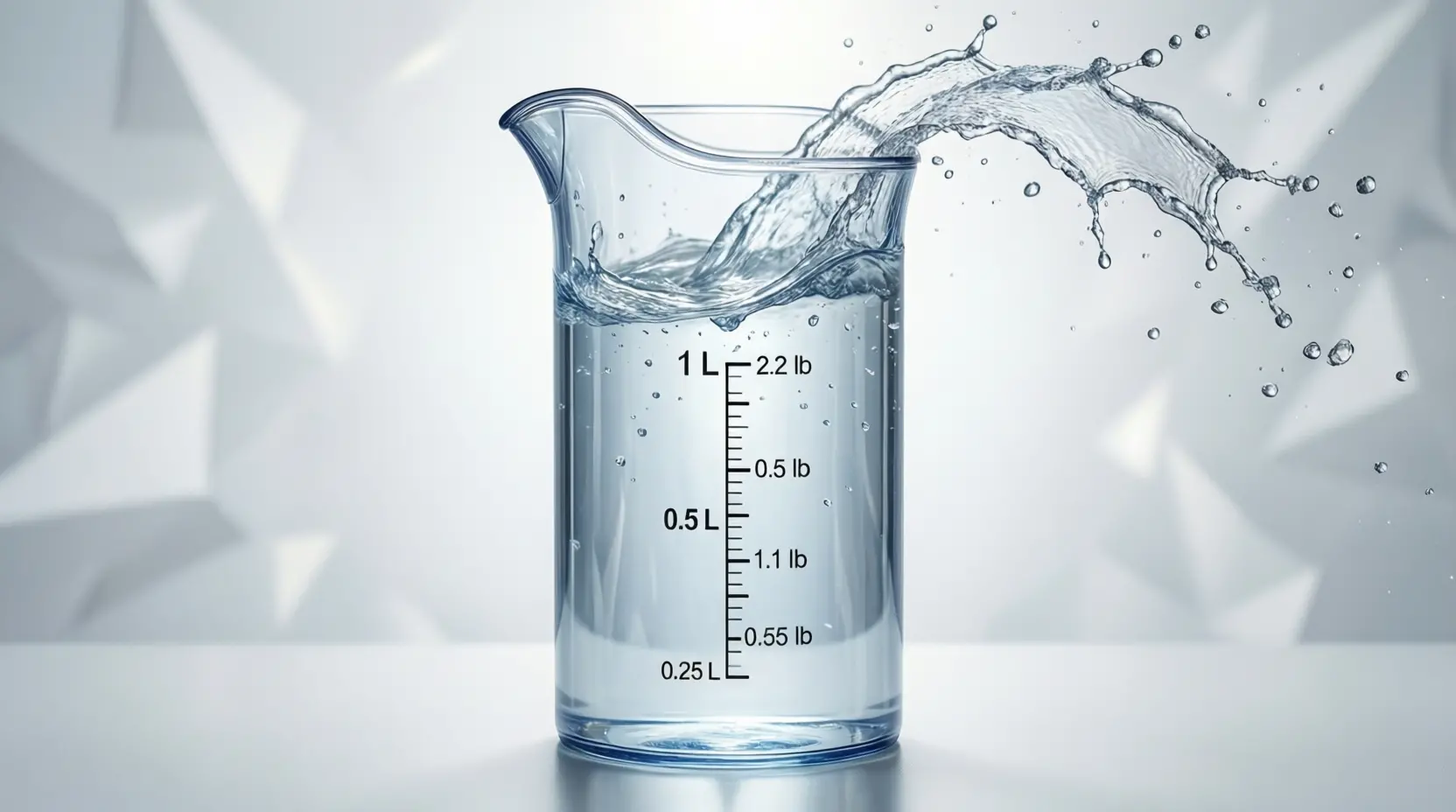
Water is all around us, yet many people underestimate just how much it weighs. Understanding the weight of water is essential in everyday life, whether you’re cooking, measuring ingredients, tracking hydration, or planning a science experiment.
For instance, a single liter of water weighs about 1 kilogram, while a gallon weighs over 8 pounds facts that can make a surprising difference in practical situations.
The weight of water is influenced by several factors, including temperature, salinity, and even the container it’s in, making it a fascinating topic for both science enthusiasts and curious minds alike.
In this article, we’ll break down the science behind water weight, explore how it affects daily activities, and provide practical tips to measure and calculate it accurately. By the end, you’ll have a clear understanding of water’s weight and why it matters in so many aspects of life.
The Science Behind Water Weight
Water may seem simple, but its weight is governed by scientific principles that affect everyday life. At its core, water has a density of 1 gram per cubic centimeter (1 g/cm³) at 4°C, which means that 1 liter of water weighs exactly 1 kilogram. Similarly, in the imperial system, 1 gallon of water weighs about 8.34 pounds. This relationship between volume and weight makes it easy to calculate how heavy any amount of water is, whether it’s in a bottle, a bathtub, or a swimming pool.
Temperature also plays a role. Cold water is slightly denser than warm water, meaning it weighs a tiny bit more per liter. While the difference may not matter in daily life, it can be significant in scientific experiments or engineering calculations. Another factor is salinity: saltwater is denser than freshwater, so a liter of seawater weighs more than a liter of plain water.
Converting water volume to weight is simple once you know these principles. For example, 500 milliliters of water weighs 0.5 kilograms, and 2 gallons weigh roughly 16.68 pounds. Understanding these basic conversions is not only useful for science and cooking but also helps track water intake in fitness, measure water for gardening, or even calculate the load when transporting water containers.
Water Weight in Everyday Life
Water weight isn’t just a scientific concept—it’s something we encounter daily, often without realizing it. Take the kitchen, for example. Cooking and baking require precise measurements, and knowing the weight of water can make a big difference. A recipe calling for 2 cups of water is equivalent to about 473 milliliters or nearly half a kilogram. Misjudging this can affect the texture of baked goods, the consistency of soups, or even the taste of beverages.
In the household, the weight of water becomes tangible when dealing with containers, bathtubs, or even large water tanks. Filling a standard bathtub with 200 liters of water adds roughly 200 kilograms (about 440 pounds). That’s a load you definitely don’t want to overlook in plumbing or structural planning. Even carrying smaller containers, like a 5-gallon water jug, means lifting over 40 pounds, demonstrating how quickly water’s weight adds up.
Water weight is also a common term in health and fitness. When people talk about “losing water weight,” they’re referring to fluctuations in the body’s water content. Understanding that 1 liter of water equals 1 kilogram helps individuals track hydration, monitor fluid intake, or estimate temporary weight changes after exercise.
By recognizing the weight of water in daily scenarios—from cooking to personal health—you gain a practical understanding of how much mass this seemingly “light” substance actually holds. It’s a simple concept that impacts life in more ways than most people realize.
Factors Affecting Water Weight
While water may seem uniform, its weight can vary slightly depending on several key factors. One of the most noticeable influences is temperature. Water is densest at 4°C (39°F), meaning it reaches its maximum weight per volume at this temperature. As water warms, it expands slightly, reducing its density and making it very slightly lighter. Conversely, colder water contracts and becomes denser, increasing its weight. In most everyday scenarios, these changes are minimal, but they can be important in scientific experiments, engineering calculations, or large-scale water storage.
Salinity is another major factor. Saltwater, such as in oceans or seas, contains dissolved salts that increase its density. This means that a liter of seawater weighs more than a liter of freshwater, roughly 1.02 kilograms compared to 1 kilogram. This difference affects buoyancy, marine life, and calculations in shipping or desalination projects.
Pressure also influences water weight, although its effects are most noticeable in deep-sea environments. As water pressure increases with depth, it compresses slightly, increasing density. While everyday activities rarely involve such pressures, engineers designing submarines, pipelines, or deep-water structures must account for this subtle weight increase.
By understanding these factors—temperature, salinity, and pressure—you gain a more precise perspective on water’s weight. Even a substance as simple and familiar as water can have small variations that matter in science, industry, and nature.
Common Misconceptions About Water Weight (250 words)
Despite being a familiar substance, water is often misunderstood, especially when it comes to its weight. One common misconception is related to the human body. Many people believe that sudden changes on the scale are fat gain or loss, but often, it’s simply water weight. The body naturally retains or releases water based on factors like sodium intake, hormonal changes, or hydration levels. Understanding that 1 liter of water equals 1 kilogram helps differentiate between temporary water fluctuations and actual fat changes.
Another myth involves “light” or “special” water. Some marketing claims suggest that certain types of water can be lighter or somehow reduce weight magically. In reality, pure water’s weight is consistent—variations only occur due to temperature, dissolved minerals, or salinity. No type of water will drastically alter its mass for weight loss purposes.
People also miscalculate water in cooking or daily activities. For example, assuming that a gallon of water is light can lead to unexpected heavy loads when lifting containers, filling bathtubs, or moving tanks. This misunderstanding is more than an inconvenience—it can impact safety and planning.
Finally, some assume that warm water weighs less than cold water by a noticeable amount. While temperature does slightly affect density, the difference is minimal in everyday scenarios, so it’s not significant for cooking or hydration.
By clarifying these misconceptions, we can better appreciate water’s true weight and its role in health, cooking, and daily life. Recognizing these truths prevents mistakes and promotes accurate measurement in all activities involving water.
Measuring and Estimating Water Weight
Measuring water weight accurately is easier than many people think, thanks to simple tools and clear formulas. At its core, water’s weight is directly proportional to its volume, making calculations straightforward. 1 liter of water equals 1 kilogram, and 1 gallon equals about 8.34 pounds. Using these conversions, you can quickly estimate the weight of any container of water.
For small volumes, a kitchen scale works perfectly. Simply place the container on the scale, subtract the container’s weight, and you have the exact water weight. Measuring cups or graduated containers also work well for volume-based calculations. For instance, 500 milliliters equals 0.5 kilograms, and 2 cups of water roughly equal 0.47 kilograms.
For larger volumes, such as water tanks, pools, or industrial applications, formulas are more practical. Multiply the volume in liters by 1 kilogram, or in gallons by 8.34 pounds, to estimate the total weight. Keep in mind temperature and salinity if precision is important, such as in scientific experiments or shipping calculations.
Digital calculators and smartphone apps can also simplify these conversions, providing instant weight results for any volume of water. Additionally, visualizing the weight can help in daily life—lifting a 5-gallon water jug, for example, is lifting over 40 pounds, emphasizing water’s surprising mass.
By knowing the tools and simple calculations, measuring water weight becomes practical and accurate, whether you’re cooking, tracking hydration, or handling large quantities for work or leisure.
Fun Facts and Interesting Observations About Water Weight
Water may seem ordinary, but its weight can lead to some surprising facts and observations. For example, a standard Olympic-sized swimming pool holds about 2.5 million liters of water, which translates to roughly 2,500 metric tons. That’s heavier than most buildings! Even smaller-scale examples are striking: a typical bathtub filled to the brim weighs over 400 pounds, emphasizing how much mass water truly has.
Water’s weight also plays a crucial role in buoyancy and floating objects. Ships, submarines, and even small boats rely on the principle that the water they displace must equal their weight. This makes understanding water density and weight essential in marine engineering and safety.
In nature, water weight influences rivers, lakes, and dams. Engineers must calculate the total weight of stored water to ensure structures remain safe under immense pressure. A large reservoir can weigh millions of tons, demonstrating water’s hidden strength.
On a lighter note, water’s weight can surprise us in daily life. Lifting a 5-gallon jug, carrying a full bucket, or even filling a large aquarium can feel heavier than expected. Knowing that 1 gallon weighs over 8 pounds can prevent accidents and improve planning.
Finally, fun experiments—like weighing ice cubes before and after melting—show how water retains mass even as it changes form. These observations make water weight not just a scientific fact, but a fascinating topic for learning, experimentation, and everyday awareness.
Conclusion and Key Takeaways
Understanding the weight of water is more than just a scientific curiosity—it has practical implications in everyday life, from cooking and fitness to engineering and nature. Water may appear light and simple, but its mass adds up quickly, whether you’re filling a glass, lifting a jug, or calculating the load of a swimming pool. Knowing that 1 liter of water weighs 1 kilogram and 1 gallon weighs 8.34 pounds provides a foundation for accurate measurements and better decision-making in daily activities.
Several factors influence water’s weight, including temperature, salinity, and pressure. Cold water is slightly denser than warm water, and saltwater weighs more than freshwater, while deep-sea pressures can compress water minutely, increasing its density. These variations, though small in daily scenarios, are important in science, industry, and engineering.
Common misconceptions, such as confusing water weight with fat gain or believing in “light” water types, can lead to mistakes in health, cooking, or planning. By understanding water’s true weight, you can avoid these errors and apply this knowledge practically.
Finally, measuring and estimating water weight is simple with tools like kitchen scales, measuring cups, or volume-to-weight formulas. Even large volumes can be calculated easily with basic conversions, making water’s weight a manageable and understandable concept.
By appreciating the science and practical significance of water weight, you gain insight into a substance we interact with every day. From hydration and cooking to engineering and curiosity-driven experiments, knowing how much water weighs empowers you with knowledge for life.

David is the creative mind behind jokes Crafter, a hub for clever jokes, witty wordplay, and laugh-out-loud content. With a passion for humor and a knack for crafting the perfect punchline, David brings smiles to readers across the globe. When he's not writing, he's probably thinking up his next viral joke or enjoying a good comedy show.
- David

- David
- David
- David
- David
- David
- David
- David
- David
- David